
REVIEW · KO LANTA & EMERALD CAVE TRIPS
Koh Lanta: Evening Course at Lanta Thai Cookery School
Four dishes, cooked with a Thai chef’s help. This Koh Lanta evening course at Lanta Thai Cookery School is interesting because you start with a look at the herbs and spices, then you cook them yourself in a spacious teak-wood house. I like the small-group setup (up to about a dozen), and I also like that you’re taught to make real Thai dishes using practical steps, not vague tips. One possible drawback: if the group runs near the upper end, the pace can feel busy and a bit rushed toward the end.
You also get real menu choice. The class revolves around selecting 4 dishes (out of 10 options), and you can request vegetarian, vegan, or milder spice levels so the meal still fits your preferences. I also appreciate that you leave with a recipe book and a cooking certificate, plus you can take your leftovers home.
Logistics are straightforward, too. You’ll get hotel pickup by songtaew (shared-style passenger vehicle) from the main road between Saladan and Kantiang Bay, then return after the 4-hour course. Just plan to travel light since luggage or large bags aren’t allowed and comfortable shoes matter on uneven grounds.
In This Review
- Key highlights worth planning for
- Why the 4-hour Koh Lanta format feels worth it
- Getting picked up: songtaew transfer along the Koh Lanta main road
- The teak-wood cooking house and the on-site organic garden
- Choosing your 4 dishes from the 10-dish menu
- Vegetarian, vegan, and spice control
- How the cooking lesson is structured: individual prep with chef coaching
- What you eat: the feast, plus smart leftovers
- The teaching vibe: friendliness, humor, and patient guidance
- Price and inclusions: what your $64 really covers
- Practical tips: shoes, spice choices, and avoiding end-of-class stress
- Who this Koh Lanta Thai cooking class suits best
- Should you book the Lanta Thai Cookery School evening course?
- FAQ
- How long is the Koh Lanta evening cooking course?
- Does the price include hotel pickup?
- How many dishes will I cook?
- Can I request vegetarian or vegan dishes?
- Is instruction available in English?
- What should I bring, and can I bring luggage?
Key highlights worth planning for
- Garden tour first: see the herbs, spices, and vegetables that may end up on your plate
- Cook 4 dishes hands-on: choose from a rotating list of 10 menu options
- Individual cooking, small group teaching: you’re supervised, not just watching
- Thai chefs teaching with English support: instruction is available in both English and Thai
- You’ll eat what you cook: a proper feast at the end (and you’re likely to feel stuffed)
- Take-home basics: recipe book, cooking certificate, and leftovers for later
Why the 4-hour Koh Lanta format feels worth it
At $64 per person for a 4-hour evening class, you’re paying for three things: local instruction, real cooking time, and the setup that makes Thai food “doable” at home. This isn’t a quick demo. You cook as the class goes, and you end up with a full meal you can name and recreate later.
The format also makes sense on Koh Lanta. A lot of island activities steal your whole evening. Here, you get a focused session that fits between beach time and dinner. And because the menu centers on 4 dishes (not 8 or 12), the class stays practical—you can actually learn techniques instead of just cranking out plates.
A small caution: the school limits class size, but if the day’s groups add up, it can get a little frantic. If you’re the type who hates rushing—especially when chopping herbs or tasting sauces—go with the mindset that you’ll still get value, but manage expectations on pacing.
Basing yourself down on Lanta? These Emerald Cave and island days pair well
- Koh Lanta: Adventure Sea Tour to Koh Rok and Koh Haa
★ 4.7 · 828 reviews - Koh Lanta: 4 Islands, Emerald Cave & Koh Kradan by Longtail
★ 4.4 · 766 reviews - Koh Lanta: 4 Islands and Emerald Cave Tour by Longtail Boat
★ 4.5 · 507 reviews - Ko Lanta: Mangrove Kayaking, Ko Talabeng, & Skull Island
★ 4.9 · 494 reviews
Getting picked up: songtaew transfer along the Koh Lanta main road
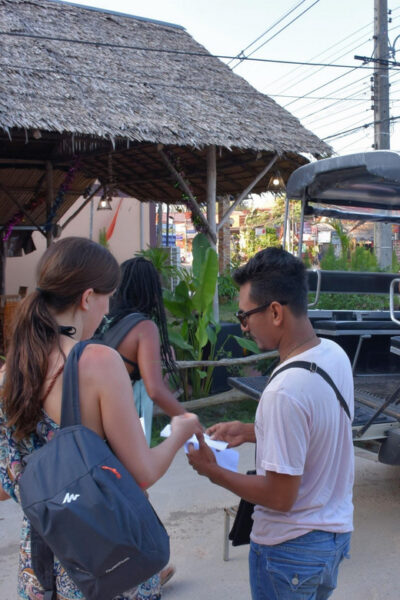
Your evening starts with pickup from your hotel by songtaew, the common open-sided or shared passenger vehicle you’ll see all over Thailand. Pickup is along Koh Lanta’s main road between Saladan and Kantiang Bay, and the exact pickup time is confirmed by email after booking.
This matters because Koh Lanta can be spread out. A transfer keeps you from having to figure out transport timing on your own. It also helps the cooking class run smoothly—most people arrive ready to cook, not scrambling with a map and a taxi debate.
Two practical points:
- Bring a little patience. Songtaews pick people up along the road, so you may not be dropped at the exact minute you imagine.
- Plan your evening so you can stay on schedule after the class finishes. You’ll want to eat what you cook while it’s fresh.
The teak-wood cooking house and the on-site organic garden
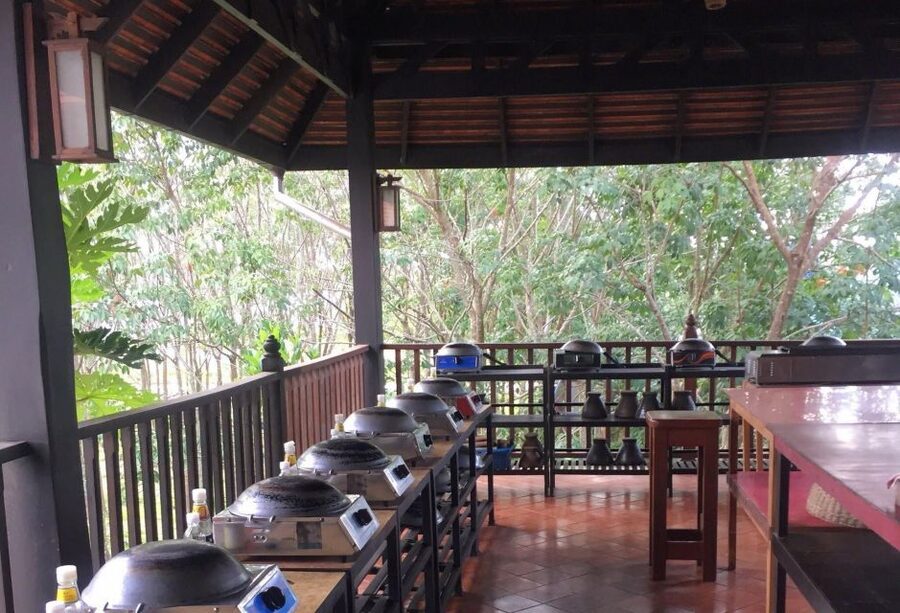
The course is held just inland in the south of Phra Ae Beach, also called Long Beach. The setting is one of those details that quietly improves the experience: a spacious teak-wood house gives you room to move, plus the whole setup feels more like a home operation than a factory tour.
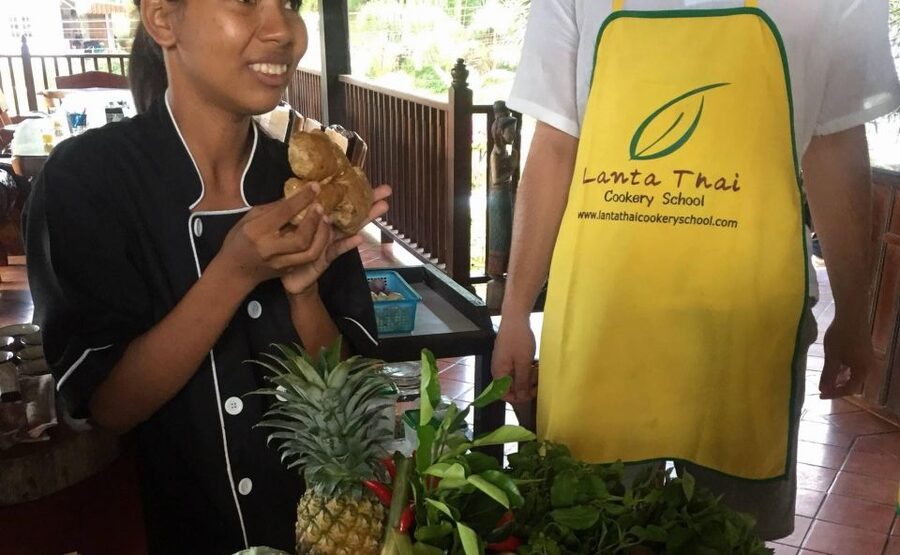
Even better, many of the ingredients come from an on-site organic garden. That means your garden walk isn’t theater. You’re seeing the plants that support Thai cooking: herbs, spices, and vegetables that later show up in soups, salads, stir-fries, and curries.
If you care about food beyond the final dish, this part helps you connect the dots. You’ll learn what ingredients do in Thai cuisine—how herbs brighten, how aromatics build depth, and how vegetables and spices stay tied to the season.
One small “comfort reality” note: since the garden and cooking area can involve outdoor footing, wear breathable clothes and comfortable shoes. If you show up in sandals or slippery footwear, you’ll feel it.
Choosing your 4 dishes from the 10-dish menu
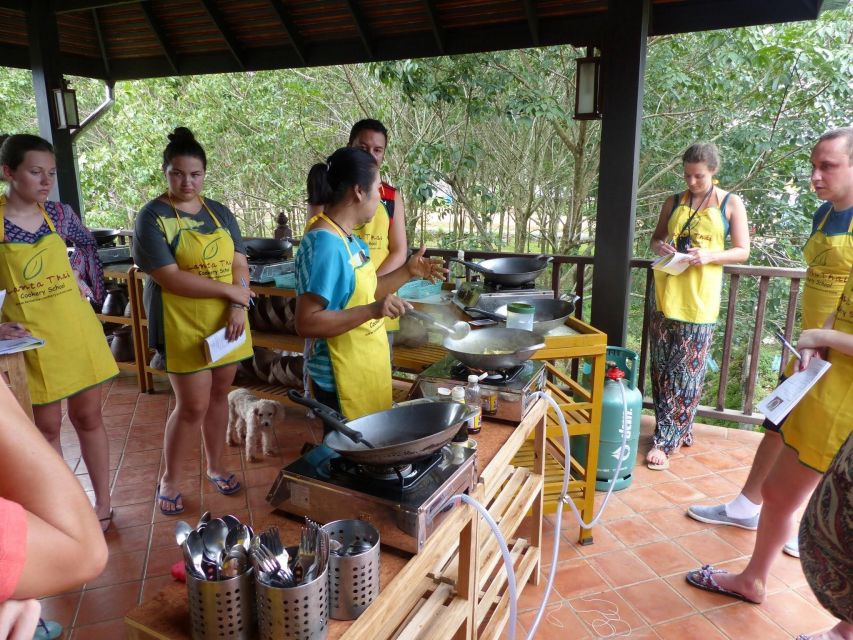
The class works like this: everyone in your group chooses 4 dishes from the available selection. The menu can change from course to course, but you’ll choose from a list that includes salads, soups, stir-fries, noodle dishes, and curries, many made with hand-made pastes.
Here’s the menu list you should expect to see options from:
- Tom Kha (coconut soup): with chicken, seafood, prawns, or vegetarian
- Vegetarian spring rolls (including making Thai sauce)
- Golden Bag Thung Thong (chicken and prawn) with Thai sauce
- Papaya salad (Som Tam)
- Mixed vegetables with oyster sauce
- Seafood in special tamarind sauce
- Massaman Curry (beef or chicken), including preparation of the paste
- Larb (chicken or seafood), Thai spicy salad from Isan
- Stir fried chicken or seafood sweet & sour
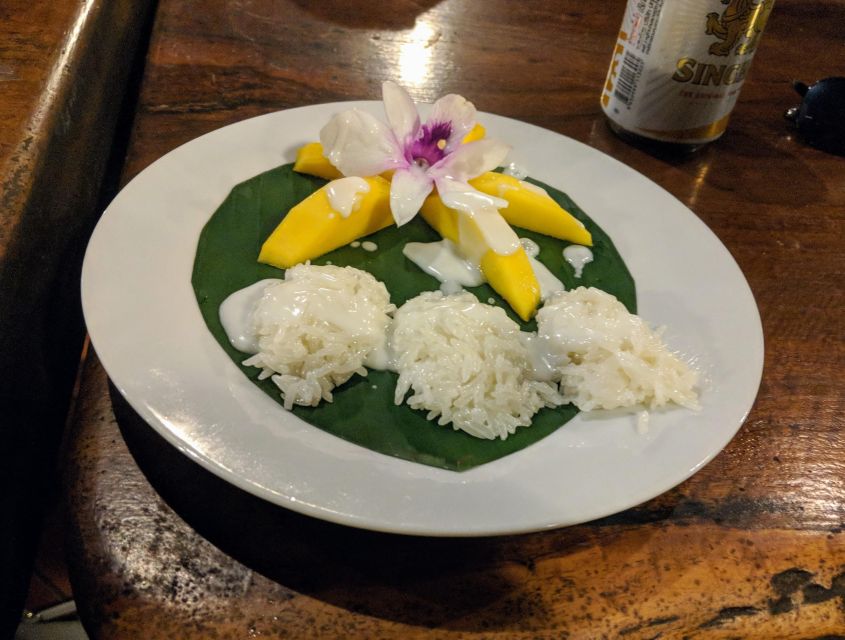
- Sticky rice with ripe Mango
What I like here is the balance. You’re not just learning “how to make one curry.” You’ll get a mix of flavors and techniques—coconut soup, salad and crunch, sweet-sour stir-fry, and a slow-building curry style through paste-making.
Taking the market-to-wok route home? More Krabi cooking classes to weigh up


Vegetarian, vegan, and spice control
You can request vegetarian or vegan, and you can adjust spice to your comfort level. The class instructions also note that dishes can be made non spicy or as spicy as you like. So if you’re traveling with someone who can’t handle heat, you can still have everyone cook the same set of dishes without awkward compromises.
A little family note: children can choose only 2 dishes, not 4.
How the cooking lesson is structured: individual prep with chef coaching
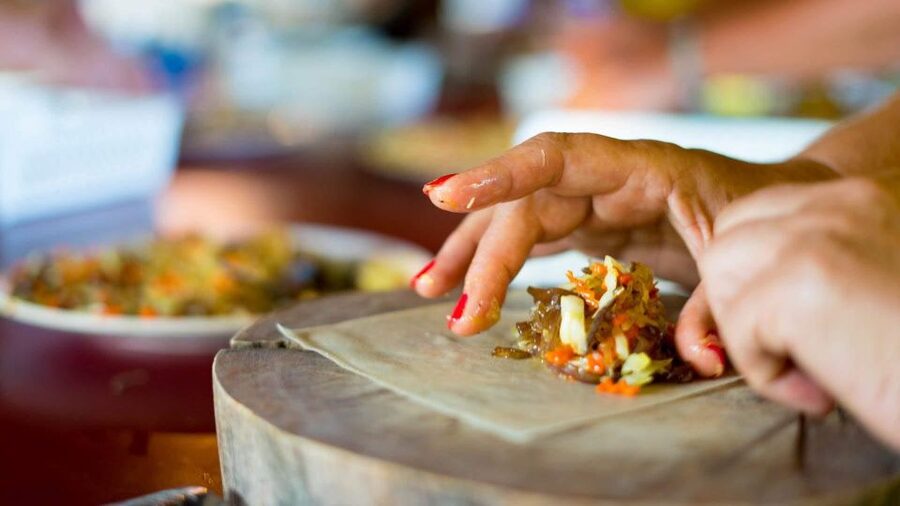
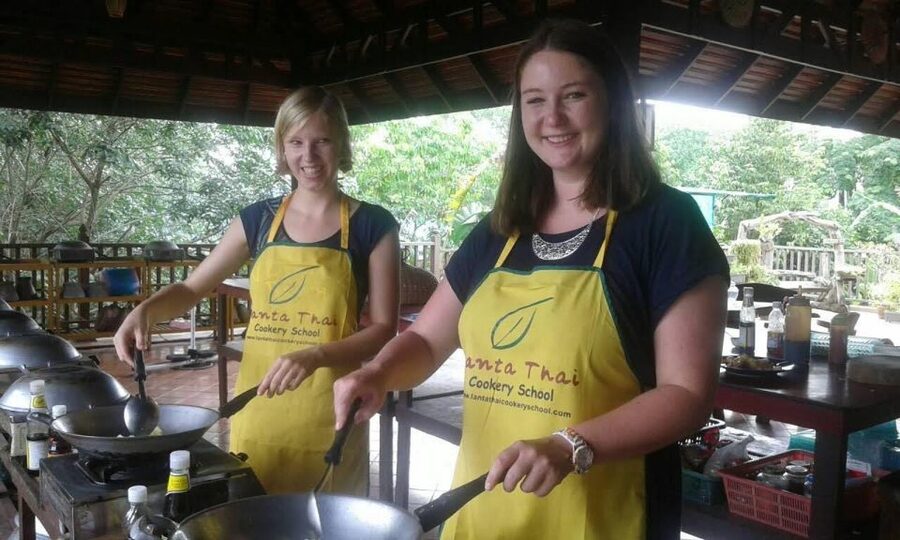
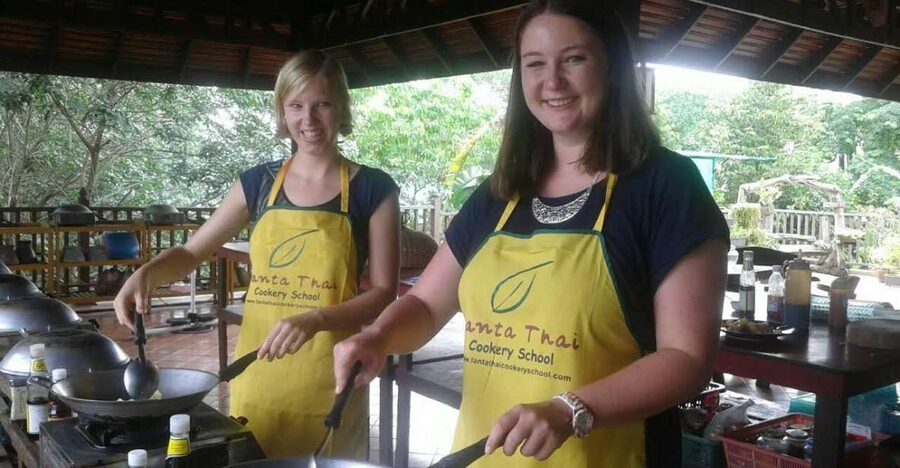
One of the biggest reasons people rate this class so highly is that you’re not stuck in a crowd watching someone else cook. The school specifies that all preparing and cooking is done individually. That means each person gets hands-on practice, with guidance from the chef and staff.
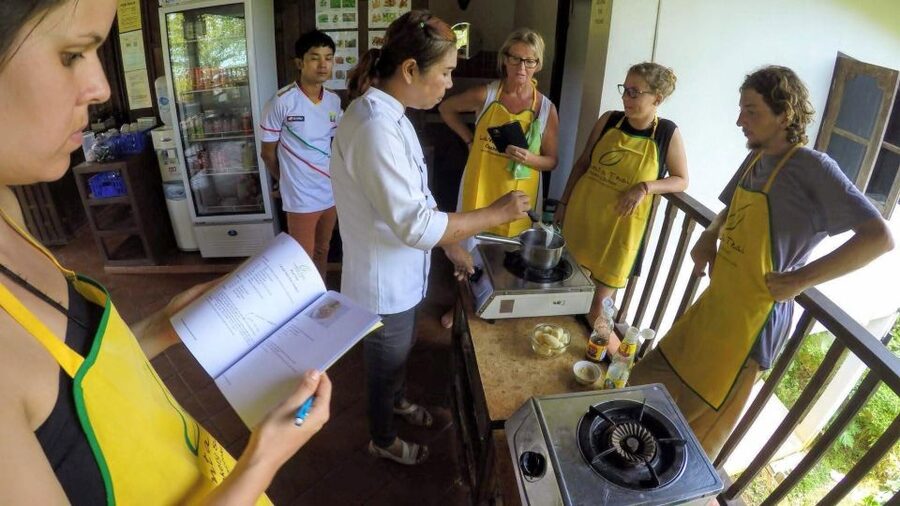
You’ll start with a welcome drink, then get useful cooking instructions from the team (the experience highlights Thai chefs Aon & Chien). Even if you’ve cooked Thai food at home, the teaching style is still helpful because it’s built around real steps: ingredient prep, paste or sauce building, timing, and how to balance flavors.
Here’s how the hands-on structure helps you:
- You learn the process, not just the recipe name.
- You can taste and adjust while it’s still in your pan or bowl.
- You leave knowing how to handle tricky bits like curry paste textures or salad flavor balancing.
And yes, it’s a real classroom feel. Small-group instruction keeps the teacher’s attention close enough that questions actually get answered, not pushed to the end.
One caution based on pacing: because you’re choosing 4 dishes and cooking individually, the class will move. If you want extra time for questions, plan to ask early, during the steps—not after the group shifts to the next station.
What you eat: the feast, plus smart leftovers
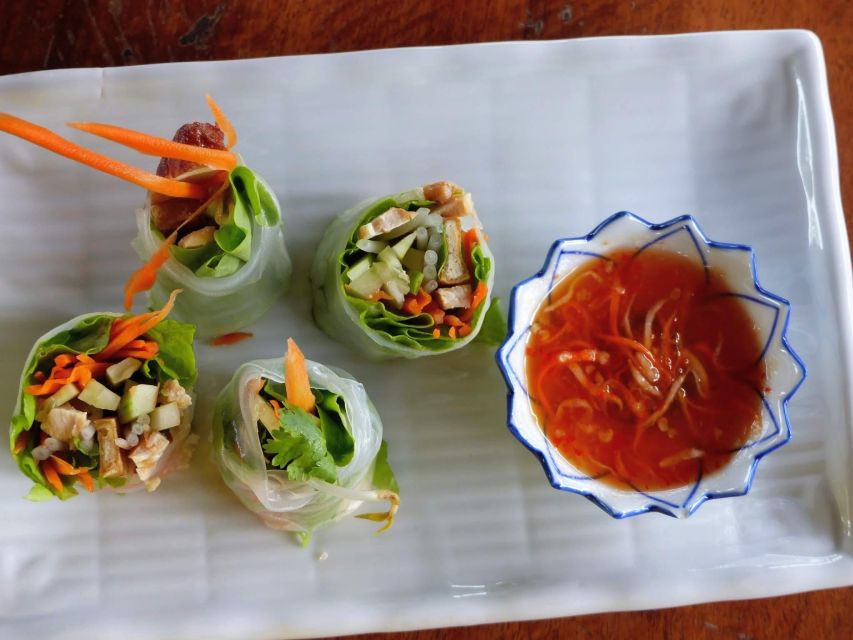
You’ll cook, then enjoy a feast that includes the dishes you make. The experience is designed around you eating what you’ve prepared, so you’ll taste your own tom kha, your own papaya salad, your own curry or larb, depending on your menu choices.
You also get to bring leftovers home, which is a surprisingly practical bonus. Thai cooking can make you feel like a professional for a night, but leftovers are what let you turn that into a meal the next day. It’s also a nice way to share with friends or family without having to cook twice.
If you’re thinking like a budget-conscious traveler: this is one of those activities where the food is part of the value. You’re not paying for a snack. You’re paying for an entire cooking-and-meal evening.
The teaching vibe: friendliness, humor, and patient guidance
In a good Thai cooking class, the food matters—but the teaching style determines whether you feel confident by the end. Here, the instruction is repeatedly described as friendly, helpful, and genuinely engaging, with teachers who guide you step-by-step and stay patient while you learn.
This is where the small-group size pays off. When your teacher can see what your hands are doing, you can correct technique before it turns into a bad sauce or an uneven chop. In that sense, the class isn’t only about recipes—it’s about learning to trust what you see and taste.
You should also expect instruction in both English and Thai, which helps if you’re the type who wants to understand why a sauce changes at certain points, not just how long to cook it.
Price and inclusions: what your $64 really covers
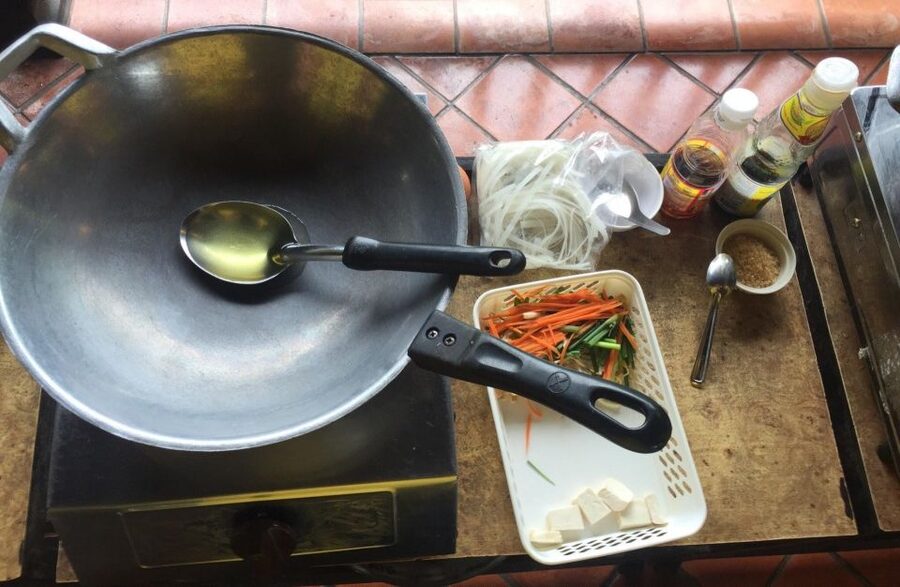
Let’s talk value without hand-waving.
At $64 per person for a 4-hour evening course, you get:
- Hotel round-trip transfer
- Drinking water, coffee, tea, fruits, and rice
- A cooking book
- Bring back leftovers
- A cooking certificate
That package changes the math. Many paid experiences on islands give you instruction but leave you to handle the transport and the timing yourself. Here, pickup is included, the food component is part of the lesson, and you leave with tangible take-homes: recipes plus a certificate.
If you’ve ever tried to reproduce Thai cooking at home, you know the gap isn’t always ingredients—it’s technique and sequence. This class fills that gap in a short time window, with ingredient prep and cooking supervised so you can come away with repeatable results.
Practical tips: shoes, spice choices, and avoiding end-of-class stress
These are the small things that make the night smoother:
- Wear comfortable shoes. The setup involves walking between areas, and cooking spaces can be outdoors or semi-outdoors.
- Choose your spice level early. Since dishes can be non spicy or as spicy as you like, you’ll cook better when everyone commits to a comfort range.
- Expect pace. Four dishes in four hours means the group moves. If you hate feeling rushed, use the first half to ask your most important questions.
- Skip big bags. Luggage or large bags aren’t allowed, so plan to travel light.
One extra comfort suggestion from real-world experience on the island: bring mosquito repellent. It’s one of those items that turns “annoying” into “not a problem” in warm, garden-like areas.
Who this Koh Lanta Thai cooking class suits best
This is a strong match for:
- Food lovers who want more than a tasting menu and want to cook real dishes
- Travelers who want a structured activity that still feels local and relaxed
- Vegetarians and vegans who want Thai recipes that can be adjusted without switching to a completely different meal
- Families with kids over age 2 (children choose 2 dishes)
It may be less ideal if:
- You need a super-quiet class where no one feels rushed at the end
- You hate hands-on cooking and would rather watch than cook (since preparing and cooking are individual)
Should you book the Lanta Thai Cookery School evening course?
If your goal is to leave Koh Lanta with skills—not just photos—this class is a smart choice. The combination of garden ingredients, hands-on individual cooking, and a set menu built around 4 dishes gives you a focused, repeatable Thai meal you can make again later.
Book it if you:
- want a convenient, included-transfer activity
- enjoy learning by doing
- like the idea of choosing dishes such as Som Tam, Massaman Curry, or Tom Kha, then actually making them yourself
Think twice if you:
- are very sensitive to time pressure near the end of an activity
- plan to bring luggage or large bags (this class won’t accommodate that)
Overall, for an evening on Koh Lanta, this is one of the most practical ways to turn local food culture into something you can take home.
FAQ
How long is the Koh Lanta evening cooking course?
The course lasts 4 hours.
Does the price include hotel pickup?
Yes. Hotel round-trip transfer is included, with pickup by songtaew from the main road between Saladan and Kantiang Bay.
How many dishes will I cook?
You’ll choose 4 dishes from a selection of 10, and you’ll cook them during the class.
Can I request vegetarian or vegan dishes?
Yes. All dishes can be made vegetarian, and the class also notes you can request vegan options.
Is instruction available in English?
Yes. The instructor supports English and Thai.
What should I bring, and can I bring luggage?
Wear comfortable shoes and breathable clothing. Luggage or large bags are not allowed.
More from the Krabi Notebook
- Koh Lanta: Adventure Sea Tour to Koh Rok and Koh Haa★ 4.7 · 828 reviews
- Ko Lanta: Half-Day Mangrove Kayaking Tour with Lunch★ 4.7 · 806 reviews
- Koh Lanta: 4 Islands, Emerald Cave & Koh Kradan by Longtail★ 4.4 · 766 reviews
- Koh Lanta: 4 Islands and Emerald Cave Tour by Longtail Boat★ 4.5 · 507 reviews
- Ko Lanta: Mangrove Kayaking, Ko Talabeng, & Skull Island★ 4.9 · 494 reviews
More Krabi Kitchens to Cook In
- Lanta Thai Cookery School★ 5.0 · 155 reviews
- Koh Lanta: Lunch Course at Lanta Thai Cookery School★ 4.9 · 139 reviews
- Half Day Lanta Thai Cookery School From Koh Lanta★ 5.0 · 15 reviews
- Cooking Class and Market Tour at Lanta Thai Cookery School on Koh Lanta★ 5.0 · 14 reviews
- Cooking Experience at Lanta Thai Cookery School From Koh Lanta★ 4.5 · 14 reviews
More Days out of Ko Lanta
- Koh Lanta: Adventure Sea Tour to Koh Rok and Koh Haa★ 4.7 · 828 reviews
- Ko Lanta: Half-Day Mangrove Kayaking Tour with Lunch★ 4.7 · 806 reviews
- Koh Lanta: 4 Islands, Emerald Cave & Koh Kradan by Longtail★ 4.4 · 766 reviews
- Koh Lanta: 4 Islands and Emerald Cave Tour by Longtail Boat★ 4.5 · 507 reviews
- Ko Lanta: Mangrove Kayaking, Ko Talabeng, & Skull Island★ 4.9 · 494 reviews
More Krabi tours we have been through, start to finish






Ko Lanta & Emerald Cave Trips, compared.
 ★ 4.7Koh Lanta: Adventure Sea Tour to Koh Rok and Koh HaaFrom $55828 reviews
 ★ 4.7Half-Day Mangrove Kayaking Tour with LunchFrom $26806 reviews
 ★ 4.4Koh Lanta: 4 Islands, Emerald Cave & Koh Kradan by LongtailFrom $35766 reviews
 ★ 4.5Koh Lanta: 4 Islands and Emerald Cave Tour by Longtail BoatFrom $35507 reviews
 ★ 4.9Mangrove Kayaking, Ko Talabeng, & Skull IslandFrom $63494 reviews
 ★ 4.7From Koh Lanta: Koh Haa & Koh Rok Snorkel Tour by SpeedboatFrom $54403 reviews
 ★ 4.8Ko Lanta Yai: Half-Day Ethical Elephant Sanctuary TourFrom $78338 reviews
 ★ 4.14 Islands Snorkeling Tour by Longtail BoatFrom $31297 reviews
Browse the lists this tour appears in