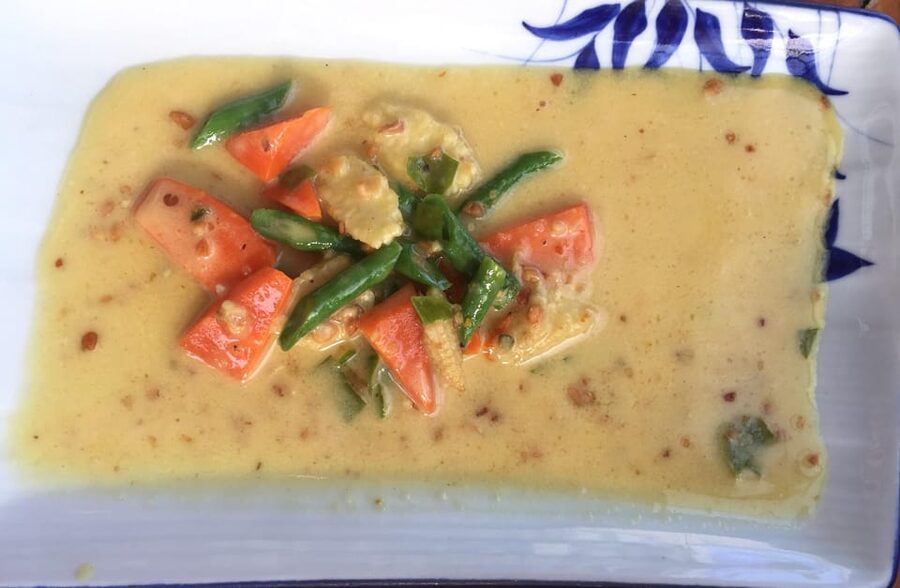
REVIEW · KRABI
Krabi: Unveiling Thai Flavors by Night at Smart Cook School
Cooking Thai food at night makes Krabi stick. The small-group Smart Cook class (max 10) is built for real attention, and I like that the food can be made vegetarian-friendly or adjusted to your tastes. One thing to think about: you only cook 5 dishes from a set menu, so you’ll have to choose what matters most.
You’ll also start easy with hotel round-trip pickup from Ao Nang or Ao Nammao, then cook in a clean open-air kitchen where utensils and work areas are sanitized daily. The class runs about 3 hours, and you’ll leave with recipes and techniques you can actually repeat later at home.
In This Review
- Key things that make this Krabi cooking night work
- Cooking Thai flavors in Krabi: more than a meal
- Smart Cook Thai Cookery School: clean open-air cooking, small attention
- Ao Nang and Ao Nammao pickup: how the 3-hour flow feels
- Welcome refreshments and Thai flavor basics: what you learn before cooking
- Choosing your 5 dishes: building your personal Thai menu
- The 1-hour cooking class: technique over memorizing
- Dinner time plus spicy salad prep: what you’ll actually eat
- What makes the class feel human: instructors, humor, and patience
- Price and value: $45 for cooking, pickup, ingredients, and dinner
- Who should book Smart Cook in Krabi (and who might want another plan)
- Should you book this Krabi Thai cooking class?
- FAQ
- Where are pickup and drop-off locations?
- How long is the cooking class?
- How many people are in the class?
- What dishes can I choose to cook?
- Can the food be made vegetarian or adjusted to taste?
- What should I bring?
Key things that make this Krabi cooking night work
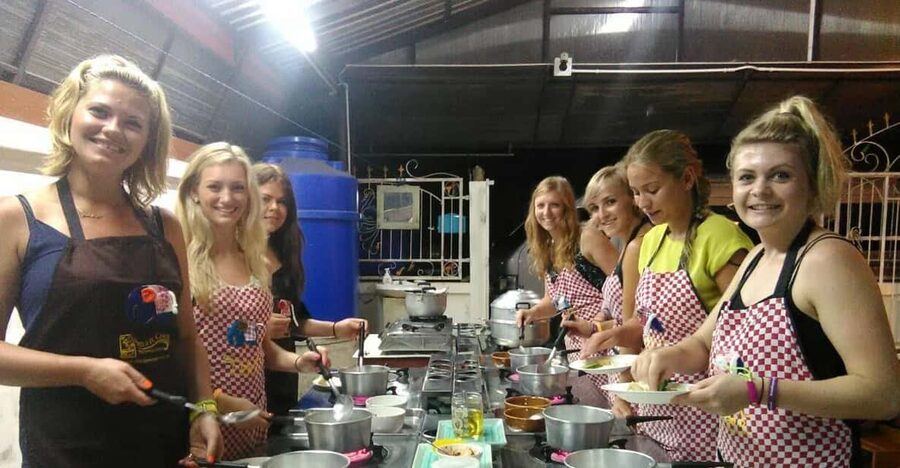
- Pick 5 dishes from a real Thai menu, including curries, soups, noodles, and spring rolls
- Small group (10 people max), so your questions don’t get lost in the crowd
- Open-air kitchen that stays clean, with sanitized utensils and daily cleaning
- Thai flavor balance is taught, not just a list of steps
- Vegetarian and personal taste adjustments are built into the experience
Cooking Thai flavors in Krabi: more than a meal
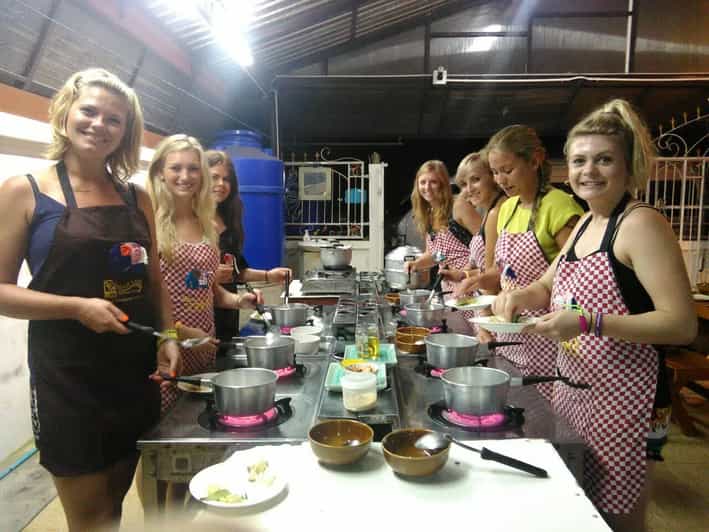
Krabi has plenty of great food, but a cooking class changes the way you taste it. When someone shows you why Thai food tastes the way it does—sweet, sour, salty, spicy—you start recognizing patterns everywhere you eat after this. That’s the real takeaway: you’re not just eating dinner, you’re learning a method.
This one is also friendly for beginners. You’re given English recipes and instructions, and the pace is set for learning. If you’ve ever ordered Pad Thai in a restaurant and wondered what made it taste different, this is the kind of class that helps you understand those differences.
The “at night” part matters too. You’re doing something active in Krabi’s cooler hours, then sitting down to eat what you made. It’s a solid plan when you want one experience that feels like Krabi, not another check-the-box tour.
Still weighing up your days on the water? Here are more Krabi trips worth a look.
- Krabi: Premium 4-Island Day Trip by Longtail Boat with Lunch
★ 4.5 · 4,812 reviews - Krabi: Tiger Cave, Hot Springs and Emerald Pool Jungle Tour
★ 4.2 · 2,643 reviews - Krabi: Elephant Sanctuary (near Ao Nang) Visit
★ 4.9 · 1,036 reviews - Krabi: Bioluminescent Plankton, Snorkeling & Sunset Tour
★ 4.3 · 863 reviews
Smart Cook Thai Cookery School: clean open-air cooking, small attention
The setup at Smart Cook Thai Cookery School is designed like a Thai home kitchen, but with a system. You cook in a clean open-air kitchen, and the cooking areas and utensils are kept well cleaned and sanitized daily. That’s not a small detail—clean tools and a tidy work zone make the whole class feel calmer and safer.
Your class size is limited to 10 people, which changes everything. You’re not fighting for space around a single stove or repeating questions over and over. You can watch what the instructor is doing, get feedback, and adjust as you go.
You’ll also have a team of Thai cooking experts guiding the process. The class includes English support, and the instructor speaks English and Thai, which is helpful if you’re learning new ingredient names. Expect a hands-on tone: you’re not just watching a demonstration and going through the motions.
Ao Nang and Ao Nammao pickup: how the 3-hour flow feels
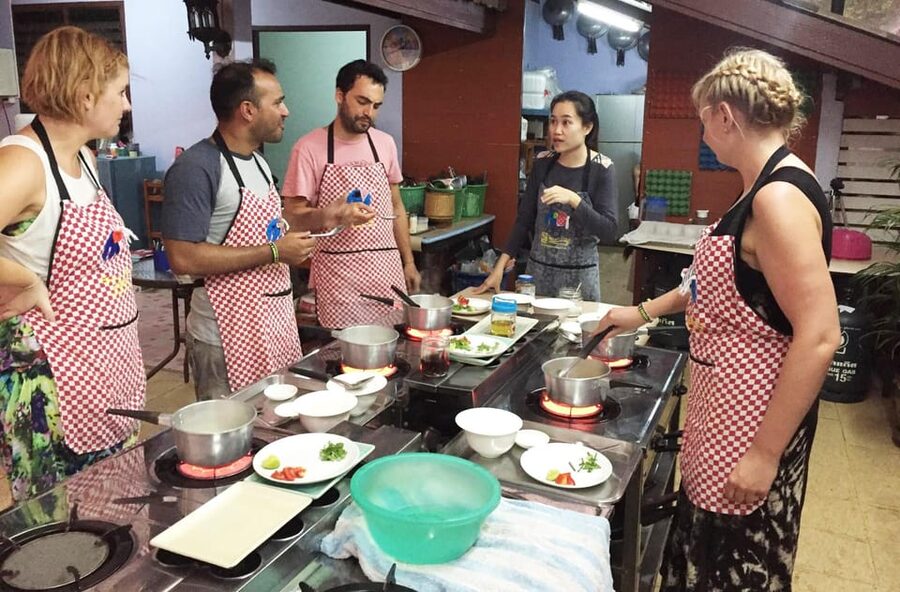
The schedule is tight and realistic: about 3 hours total with hotel pickup and drop-off. You can be picked up from Ao Nang or Ao Nammao, and then you return to one of those drop-off locations at the end.
Here’s the timing you can plan around:
- Welcome refreshments for about 15 minutes
- A workshop segment for about 20 minutes
- Cooking class for about 1 hour
- Dinner for about 45 minutes
This structure is smart. The welcome and workshop segments get you oriented before you hit the stove, and the dinner gives you time to taste everything without rushing. If you’ve got a Krabi evening with plans afterward, you’ll still want a little buffer, but this is generally the kind of activity that fits into a normal day.
If you’re staying outside Ao Nang/Ao Nammao—Krabi Town, Klong Muang, or Tubkaek Beach—there’s a small extra charge for the round-trip transfer. Make sure your booking notes match your hotel so the driver can find you easily.
Also bring closed-toe shoes. You’ll be moving around during prep and cooking, and this is one of those “small” requirements that makes the experience more comfortable. Large luggage or bags aren’t allowed, so pack light for the evening.
Welcome refreshments and Thai flavor basics: what you learn before cooking
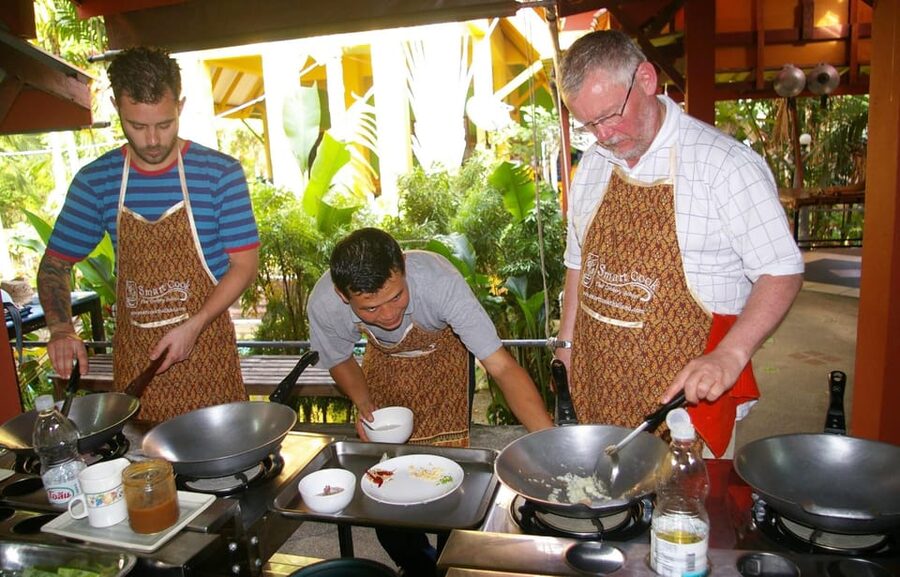
Before you start chopping and stirring, you’ll get a short introduction to the basics of Thai cuisine. This isn’t generic food talk. The focus is on the balance of flavors, and that’s a big reason Thai food tastes like Thai food.
Thai cooking often comes down to building flavor in layers: aromatics first, then salty/sour/sweet/spice balance, then finishing with fresh elements. When you understand that structure, you can replicate the taste even if your kitchen doesn’t have the exact same brands of ingredients.
This is also where the class becomes useful for people who are picky eaters. If you prefer less spicy, want more lime, or don’t eat certain ingredients, you can start thinking in terms of adjustment. The class is set up so dishes can be adapted to your taste and to vegetarian preferences.




Choosing your 5 dishes: building your personal Thai menu
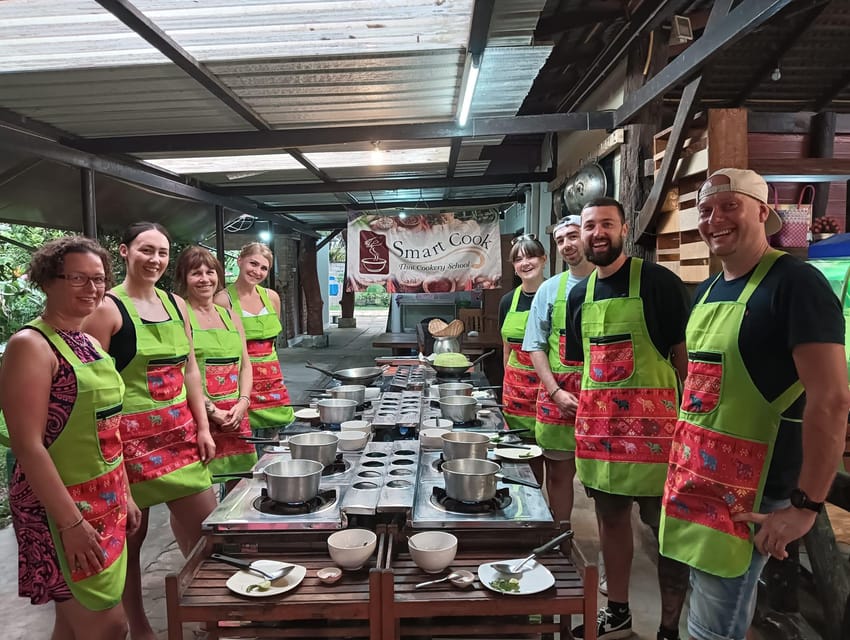
One of the best parts is that you don’t get forced into a single standard menu. You choose 5 dishes from a list that covers noodles, curries, soups, and spring rolls.
The options include:
- Fried noodles Thai style (Pad Thai)
- Fried chicken with cashew nuts
- Hot & sour prawn soup
- Chicken in coconut milk soup
- Red curry paste
- Green curry paste
- Red curry
- Green curry
- Spring rolls
- Banana spring rolls
That selection is practical. It means you can aim for what you actually like eating. Want the kind of meal you’d order at a Thai restaurant? Pick Pad Thai, a soup, and curries or spring rolls. Want something more “street food-ish”? Lean toward noodles and spring rolls.
You’ll also have flexibility for vegetarian needs. If you’re avoiding meat or fish, you can adapt what you’re making. This matters because Thai food is often protein-forward, and it’s easy for a cooking class to forget that. Here, vegetarian preference is treated as part of the process, not an afterthought.
The 1-hour cooking class: technique over memorizing
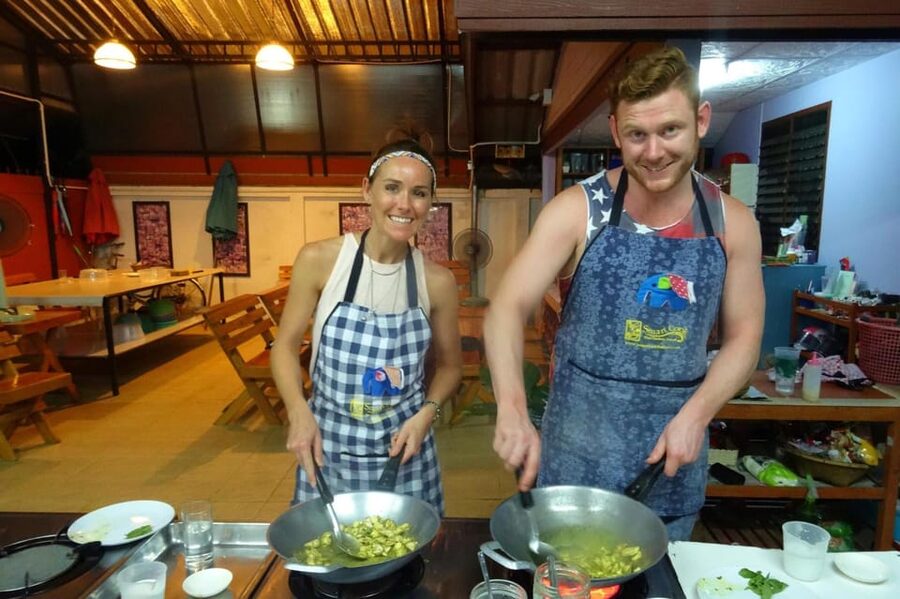
The cooking portion is about 1 hour, which means the class is designed to be efficient. You’ll learn techniques you can reuse rather than just collecting a list of steps.
Think of this like learning Thai cooking by doing:
- You get ingredients and recipes in English, so you can follow along even if you don’t know the Thai names yet.
- You’re taught how to handle core ingredients that define flavor—things like curry paste and aromatics.
- You’re cooking in an open-air kitchen, so you’re seeing the real workflow and tools people use day to day.
With a small group, instructors can correct details while you’re cooking. That’s one reason these classes often feel different from a big tourist show. You’re not waiting for someone to notice you’ve under-stirred a sauce or missed the timing.
And yes, this is where you can adjust for your taste. If you prefer mild spice, you can shift flavor balance while keeping the dish Thai. If you want it closer to your usual restaurant order, you can guide the cooking with your preferences.
If you’re learning for the first time, don’t worry about needing perfect knife skills. This kind of course usually focuses on flavor and method, not professional speed. Wear your closed-toe shoes, stay focused, and you’ll be surprised how much you can produce in one session.
Dinner time plus spicy salad prep: what you’ll actually eat
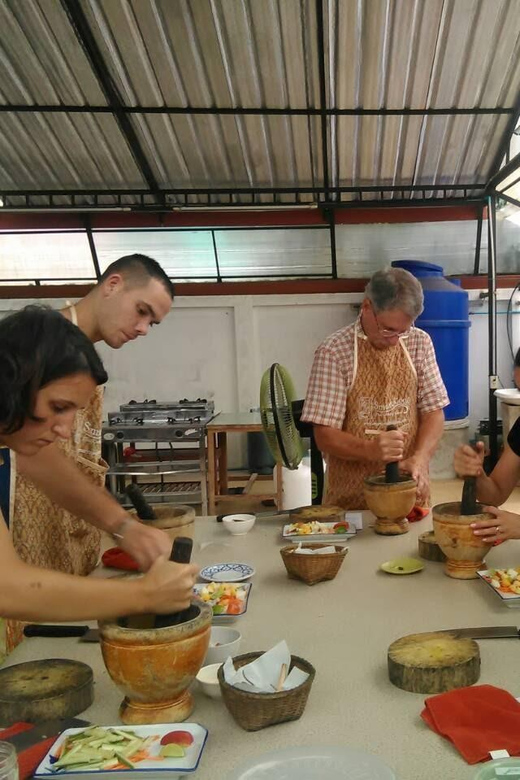
After the cooking, you’ll sit down for dinner (about 45 minutes). The dinner part is important because it gives you context. You can taste what you made and connect it to the techniques you used earlier.
Food and water are included, along with fruits. There’s also a specific included component: fruits and preparation of spicy Thai salads. That means you’re not only making one type of Thai dish. You’re practicing flavors that show up across Thai meals—fresh, spicy, salty, and sour elements.
This combination is a good value for your brain. Curries and soups teach depth, noodles teach balance and timing, and salads teach freshness and how spice behaves when it’s mixed with acid and herbs. When you leave, you’re more likely to remember what to tweak the next time you cook.
What makes the class feel human: instructors, humor, and patience
Cooking classes stand or fall on the instructor’s energy. The best teaching here is how practical and patient it is while staying fun. The host you might meet (often described as Poppy) is known for humor and for answering questions without getting impatient when the group slows down.
That matters more than people think. If you’re translating ingredients in your head, asking what a specific flavor should taste like, or wondering why one step changes the sauce, you need someone who can explain clearly and keep the mood light.
Even better, this class is set up for English-speaking guests. Recipes and instructions are in English, and the instructor speaks both English and Thai. That combination helps you learn faster, because you can connect the spoken explanation to the written recipe.
Price and value: $45 for cooking, pickup, ingredients, and dinner
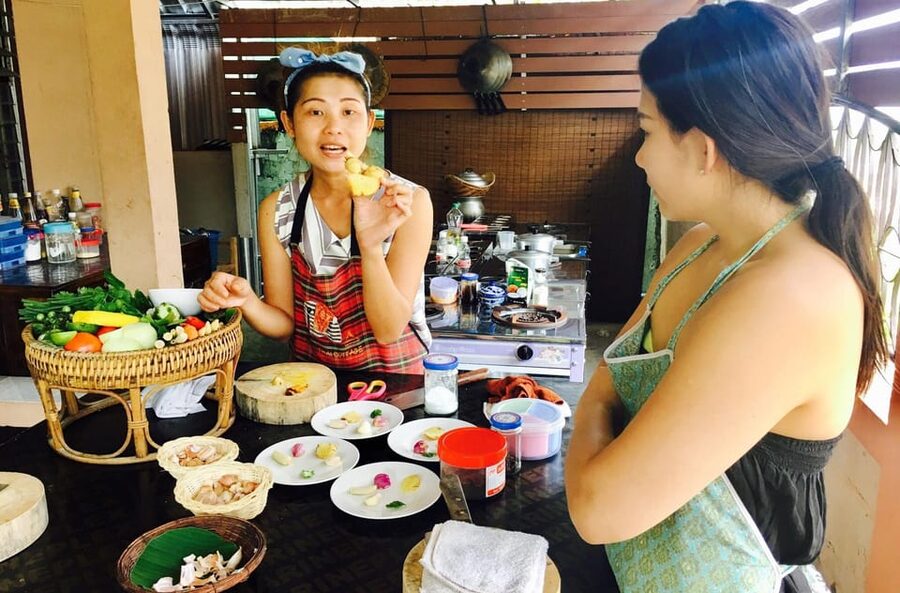
At about $45 per person for a 3-hour experience, the value comes from what’s included, not just the cooking.
You’re getting:
- Hotel round-trip transfer from Ao Nang/Ao Nammao
- Ingredients, recipes, and English instructions
- Fruits and preparation of spicy Thai salads
- Food and water
When you break it down, this is not just “a meal.” You’re paying for instruction, a controlled cooking environment, ingredients supplied for your selected dishes, plus dinner after you finish cooking.
Is it the cheapest thing in Krabi? Probably not. But cooking classes cost because they require time, staff, ingredients, and a small group setup. Here, the class size stays capped at 10, and that personal attention is part of the value.
If you’ve got only one night free and you want a memorable skill you can repeat, this is one of the stronger deals. It’s also a solid option when the weather might be moody—because the knowledge sticks even if the outdoor plans don’t.
Who should book Smart Cook in Krabi (and who might want another plan)
This cooking class is a great fit if you:
- Want a hands-on Krabi Thai cooking experience, not just watching
- Like the idea of choosing 5 dishes that match your taste
- Need vegetarian options handled during the cooking process
- Appreciate small-group teaching and clear English instructions
It might be less ideal if you:
- Hate flexibility in your menu and want a long list of dishes
- Are traveling with lots of luggage, since large bags aren’t allowed
- Want a super long course—this one is focused, with 1 hour on cooking and dinner afterward
If your goal is to learn how to cook Thai flavors at home, you’ll likely feel like you got your money’s worth because you’ll leave with both recipes and technique patterns.
Should you book this Krabi Thai cooking class?
If you want an experience that feels authentic, practical, and worth repeating later, I’d book it. The mix of small-group attention, a clean open-air setup, English instructions, and the ability to adapt dishes (including vegetarian preferences) makes it a strong choice for most visitors.
My final advice is simple: pick your 5 dishes thoughtfully. Choose the ones you actually want to learn, not the ones that look good in photos. If you do that, you’ll walk out fed, amused, and with real kitchen know-how for rainy days.
FAQ
Where are pickup and drop-off locations?
Pickup and drop-off are included for Ao Nang and Ao Nammao. If you stay in Krabi Town, Klong Muang, or Tubkaek Beach, there is a small extra charge for the round-trip transfer.
How long is the cooking class?
The experience lasts about 3 hours in total.
How many people are in the class?
The group is limited to 10 participants for maximum individual attention.
What dishes can I choose to cook?
You choose 5 dishes from the list that includes Pad Thai, fried chicken with cashew nuts, hot and sour prawn soup, chicken in coconut milk soup, red curry paste, green curry paste, red curry, green curry, spring rolls, and banana spring rolls.
Can the food be made vegetarian or adjusted to taste?
Yes. All dishes can be adapted to taste or vegetarian preferences.
What should I bring?
Bring closed-toe shoes. Large bags or luggage are not allowed.
More from the Krabi Notebook
- Krabi: Premium 4-Island Day Trip by Longtail Boat with Lunch★ 4.5 · 4,812 reviews
- Krabi: Tiger Cave, Hot Springs and Emerald Pool Jungle Tour★ 4.2 · 2,643 reviews
- Krabi: Elephant Sanctuary (near Ao Nang) Visit★ 4.9 · 1,036 reviews
- Krabi: Bioluminescent Plankton, Snorkeling & Sunset Tour★ 4.3 · 863 reviews
- Krabi: 7 Islands Sunset Tour with Plankton Swim and BBQ★ 4.0 · 808 reviews