
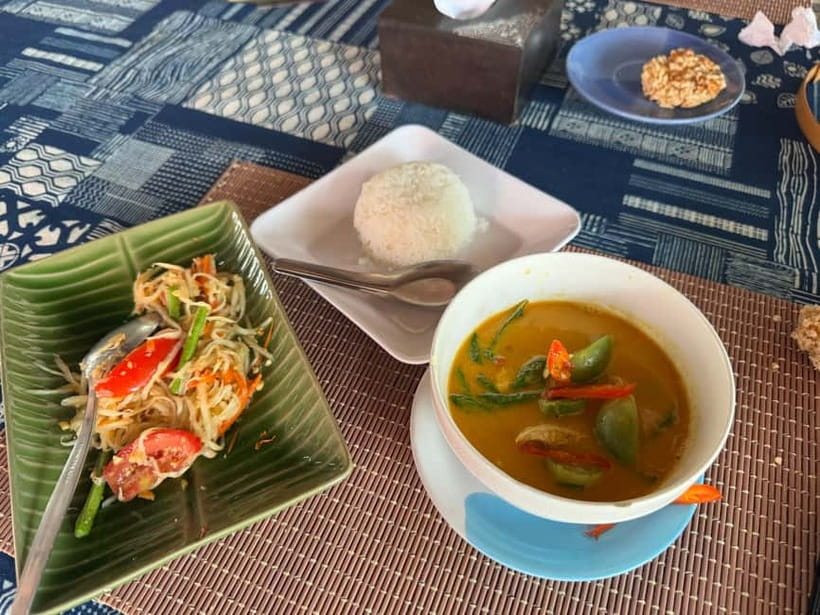
REVIEW · FOOD
Ao Nang: Hands-on Learn to Cook 3 Popular Thai’s street food
Learning Thai street food starts with 3 simple choices. In Ao Nang, I like that this is truly hands-on: you cook your own trio in a clean open-air kitchen with instructors such as New or Gataii. You also leave with a PDF recipe book you can use right away. One catch: there is no pick-up, so you’ll need to sort your own way in and out.
The menu choices are part of the fun, especially if you want vegan or vegetarian versions, because the class is built for swaps. Expect a small-group vibe, photos during the activity, and very little dish-washing drama since the team handles cleanup while you focus on cooking.
In This Review
- Key things I’d plan around
- Thai street food, taught like you’re in the kitchen with the family
- Getting started: meet your instructor and go straight to work
- The kitchen setup: clean, open-air, and built for cooking (not suffering)
- How the menu choices work (and why that matters)
- Soup slot: learn Thai balance, not just broth
- Main dish slot: the street-food techniques that change everything
- Salad slot: learn fresh, sharp, and fast
- Hands-on learning you can repeat at home
- What you eat at the end: three dishes, one meal you made
- The take-home package: PDF recipe book and photos
- Price and value: why $28 feels fair for what you get
- Logistics in Ao Nang: plan your ride back
- Who this class fits best (and who might not love it)
- Book it or skip it: my straight answer
- FAQ
- What dishes do I get to cook in this class?
- Are vegan, vegetarian, or gluten-free options available?
- How long is the cooking class?
- Is the instructor available in English?
- What’s included in the price, and what isn’t?
- Do they pick you up from your hotel?
Key things I’d plan around
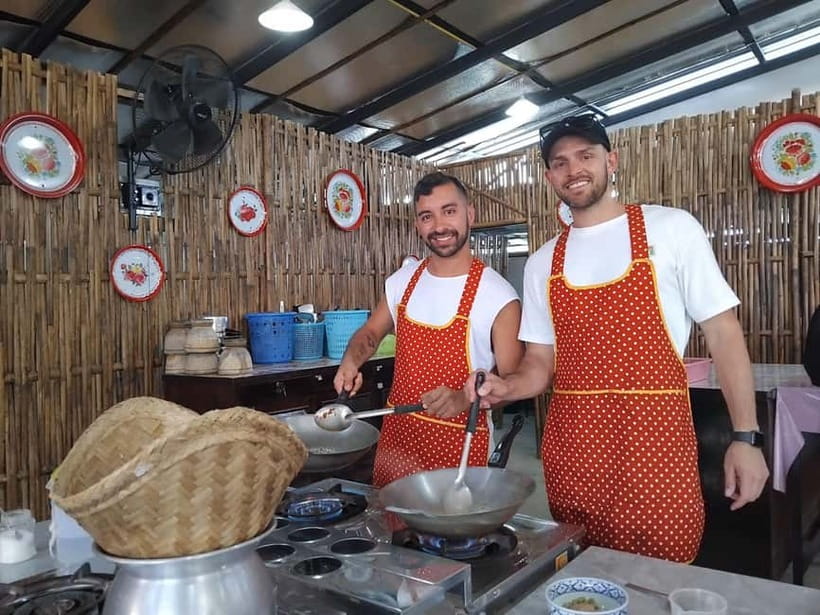
- Pick your trio (soup, main, salad): you choose three popular Thai street-food friendly dishes.
- Clear options for dietary needs: vegan, vegetarian, and gluten-free are supported when you tell them ahead.
- A clean open-air kitchen with an instructor at your elbow: you cook, then eat what you made.
- PDF recipe book plus activity photos: you get a take-home reference, not just a memory.
- Quick prep helps you actually finish: some ingredients are already prepped, so you spend more time cooking than chopping.
Thai street food, taught like you’re in the kitchen with the family
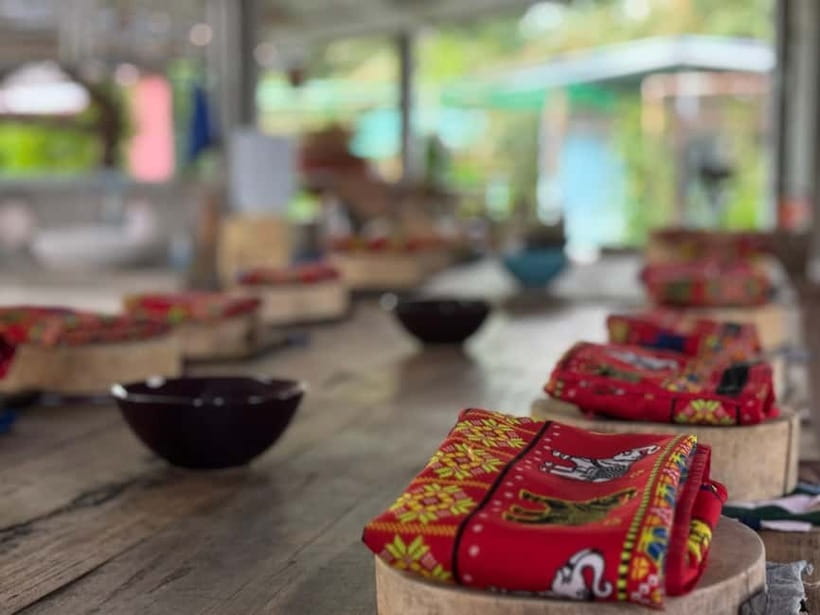
If you’ve ever wanted to understand Thai food beyond ordering it, this class is a strong next step. In Krabi’s Ao Nang area, you’re not just watching someone cook. You’re rolling up your sleeves and working through real Thai techniques while a dedicated instructor guides you.
What I love most is how practical it feels. You choose your own menu, so you’re more likely to cook things you genuinely want to eat again at home. And the whole setup is designed for action: an open-air, clean cooking space, clear step-by-step instruction, and a relaxed group atmosphere where you can ask questions without feeling rushed.
Still weighing up your days on the water? Here are more Krabi trips worth a look.
- Krabi: Premium 4-Island Day Trip by Longtail Boat with Lunch
★ 4.5 · 4,812 reviews - Krabi: Tiger Cave, Hot Springs and Emerald Pool Jungle Tour
★ 4.2 · 2,643 reviews - Krabi: Elephant Sanctuary (near Ao Nang) Visit
★ 4.9 · 1,036 reviews - Krabi: Bioluminescent Plankton, Snorkeling & Sunset Tour
★ 4.3 · 863 reviews
Getting started: meet your instructor and go straight to work
Class time is 150 minutes, which is long enough to learn but short enough that you don’t feel trapped. You’ll meet your instructor, get oriented, and then move into a hands-on workflow in a traditional Thai family-style kitchen setup.
From the way the class is run, you should expect structure. Each dish is broken into steps, and the instructor’s job is to make sure everyone knows what they’re doing. In multiple sessions, instructors like New, Tu, and Gataii get praised for keeping the mood light while still being clear with instructions.
A small practical bonus: you’ll likely find that some ingredients are already prepared (things like onion, carrot, lime are often ready). That means less waiting and more time learning the “why” behind each flavor choice.
The kitchen setup: clean, open-air, and built for cooking (not suffering)
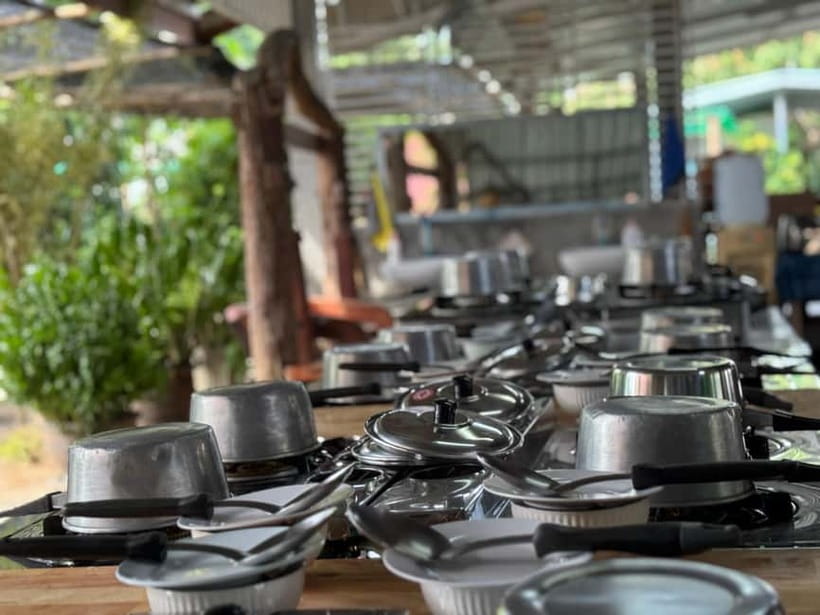
This is an open-air kitchen, so you get ventilation and that “real place, not a studio” feel. It also helps that the environment is described as clean and organized, which matters when you’re dealing with chili, herbs, and sauces.
Cooking happens in a family-style rhythm. You’ll take on tasks like chopping, mixing, and cooking components that go into each dish. Most people walk in worried about messing up sauce. The good news is the coaching is patient and forgiving, and your dish usually still turns out tasty even if you go a little off script.
One more detail that’s worth noting: you generally don’t end up doing dish duty. Helpers handle cleanup, so you can stay focused on cooking and eating.
How the menu choices work (and why that matters)
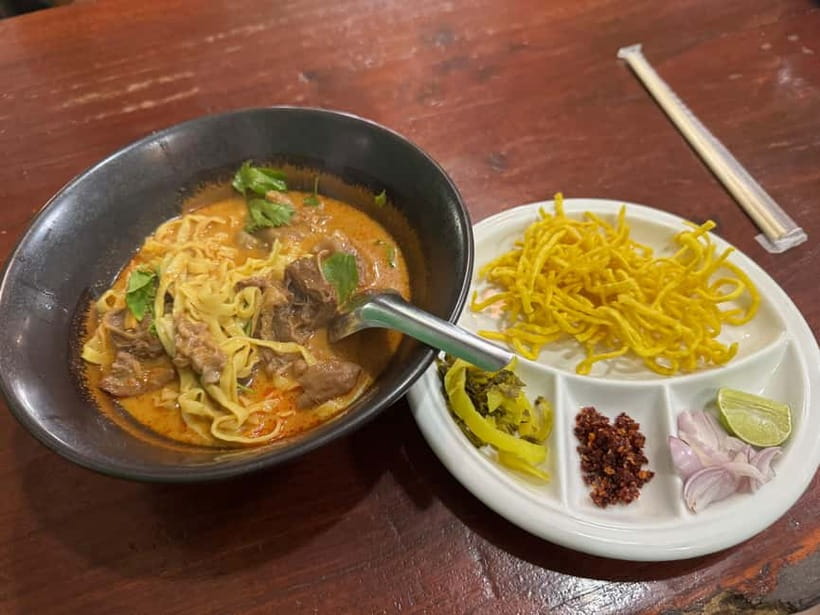
You’ll choose three dishes from a set of popular options. Typically it’s one from each category: soup, main, and salad. This is a big deal for value, because you’re not paying for one dish lesson—you’re paying for a mini Thai “food education” across different flavor styles.
Here’s how the menu breaks down:
- Soup option: local chicken soup or chicken in coconut milk soup
- Main option: Pad Thai, fried holy basil, or cashew nuts with chicken
- Salad option: papaya salad or cucumber salad
You can also request vegan, vegetarian, or gluten-free alternatives in advance. In past classes, instructors have made thoughtful substitutions—like shifting meat-based flavors to tofu and adjusting sauces—so you still learn the technique, not just the “ingredient name.”





Soup slot: learn Thai balance, not just broth
Soup teaches you Thai flavor building—tang, salt, aromatics, and the way herbs finish a dish. Whether you pick a coconut milk soup or a lighter local chicken soup style, you’ll learn how Thai soups get depth without becoming heavy.
If you’re sensitive to spice or you just want something milder, tell the instructor upfront. The class is set up to handle customization, not a one-size-fits-all plate.
Main dish slot: the street-food techniques that change everything
Your main dish choice drives the skills you’ll take home.
- Pad Thai gives you hands-on practice with tamarind-sweet-sour balance, stir-fry timing, and how to build a sauce that clings rather than pools.
- Fried holy basil teaches the punch of fresh herbs and how heat and stir-frying work together.
- Cashew nuts with chicken shows how to keep a stir-fry glossy and flavorful while using the right crunch and seasoning.
In reviews, instructors are praised for making these steps feel manageable, especially for first-timers. If you usually rely on restaurants for Thai flavor, this is where the education clicks—you start understanding why one sauce tastes “right” and another tastes flat.
Salad slot: learn fresh, sharp, and fast
Papaya salad and cucumber salad are the perfect “contrast” dishes after a cooked main. They’re where Thai food shows its brightness.
- Papaya salad tends to be more complex in flavor: sour, salty, sweet, and spicy working at the same time.
- Cucumber salad is often easier to execute while still teaching the same logic: dress, rest, taste, adjust.
If you want something that feels approachable but still very Thai, the salad choice is a safe bet.
Hands-on learning you can repeat at home
This class is designed so you leave with repeatable technique, not just a finished plate. That’s why your menu selection matters: you’re practicing the steps you actually want to recreate.
You’ll be guided through:
- choosing ingredients and understanding what each one contributes
- using Thai sauces and aromatics in the right order
- adjusting taste as you cook (so the flavor matches what you like)
- assembling each dish so it looks and tastes finished, not improvised
One of the most helpful parts is that the instructor stays close enough for quick corrections. That’s how you avoid the common tourist cooking problem: following a recipe but missing the “feel” of the sauce or the timing of the stir-fry.
What you eat at the end: three dishes, one meal you made
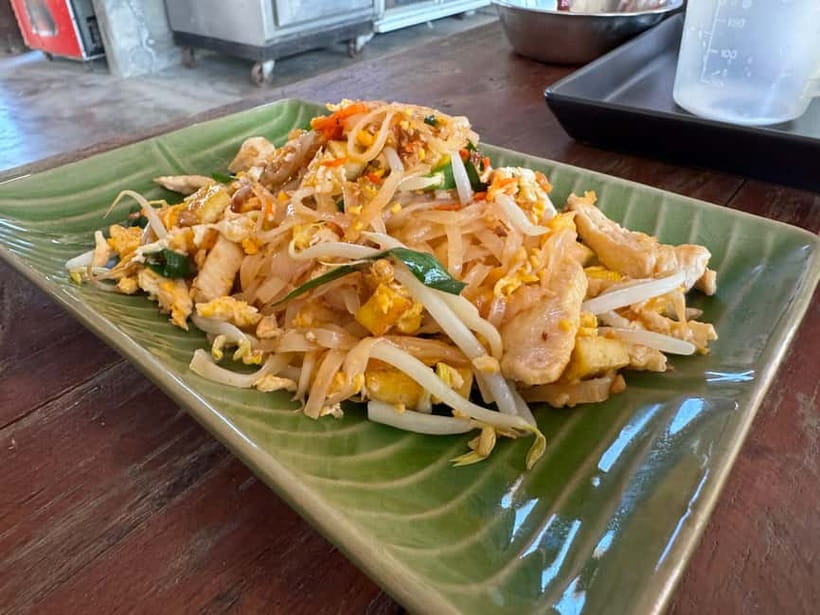
The class ends with you eating the food you cooked, not just sampling bites. That makes the experience feel complete—you learn, you cook, and you get a real meal with the payoff immediately.
Most people leave happy for a simple reason: the food is made with a clear process and taught by an instructor who knows how to troubleshoot. Reviews repeatedly call out tasty results, with a lot of laughs in the process.
Also, portioning is set up so you get multiple plates—so you’re not stuck with a tiny taste and a long lecture.
The take-home package: PDF recipe book and photos
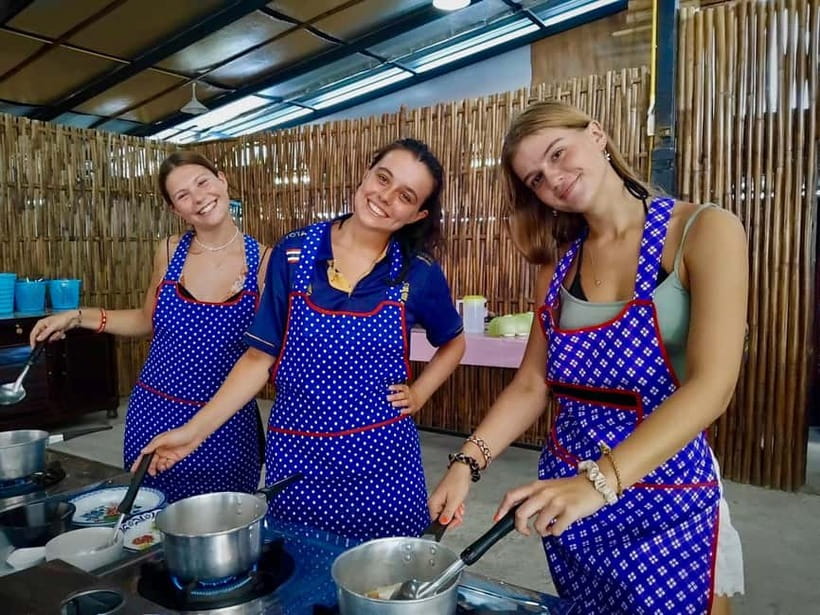
You get a PDF recipe book after the class. This is more valuable than it sounds. A good cooking class gives you methods you can remember, but the recipe book gives you something you can actually follow later when you don’t have the instructor standing next to you.
In past sessions, the PDF has been described as including more than just the three dishes you cooked, which is great if you want to branch out. You also get photos from the activity, which helps with both memory and sharing.
Practical tip: when you download the PDF, skim it once before you cook at home. Then re-read sections as you make the dish. It saves you from flipping pages with messy hands.
Price and value: why $28 feels fair for what you get
At $28 per person for about 150 minutes, you’re paying for coaching, ingredients, and a full hands-on meal structure. The class includes:
- hands-on cooking
- all ingredients
- drinking water
- the PDF recipe book
- photos of the activity
What’s not included: beer and alcohol (available for purchase), and transportation (no pick-up).
In plain terms, the value comes from three places:
- You cook three dishes, not one.
- You get a write-up you can use again later, not just a lesson.
- Cleanup work is handled by the team, so your time stays on cooking and eating.
If you’re only looking for a quick food taste, you might feel this is more “class” than “snack stop.” But if you want to learn how Thai flavors are built—this price is easier to justify.
Logistics in Ao Nang: plan your ride back
Since there’s no pick-up, you’ll need to handle your own transport. In Ao Nang, that usually means using Grab or arranging a ride on your own.
One practical consideration: getting a Grab back can be a bit annoying after a class, depending on timing and local demand. If you want a smoother exit, build in a little buffer time or line up your ride before the meal ends.
Also, the instructor speaks English, which helps if you don’t want to guess your way through Thai terms.
Who this class fits best (and who might not love it)
This is a good match if:
- you want to learn Thai flavors you can recreate at home
- you care about dietary options and want real swaps (not a separate bland plate)
- you like interactive classes more than sit-and-watch experiences
- you’re traveling with family, since reviews mention kids having fun too
You might think twice if:
- you’re short on time and want only a quick bite
- you dislike cooking at all (you will chop and cook)
- transport logistics feel stressful because there’s no pick-up
If you like food that’s made with fresh herbs, punchy sauce, and a balance of sour-salty-sweet, you’ll probably leave inspired rather than just full.
Book it or skip it: my straight answer
I’d book this class if your goal is simple: learn to cook Thai street-food favorites in a way that actually sticks. The combination of hands-on cooking, a clear dish menu (soup, main, salad), and the PDF recipe book makes it more than a one-time activity.
Skip it only if you don’t want to cook, can’t handle transport planning in Ao Nang, or you’re expecting a market tour-style day (this is focused on cooking).
FAQ
What dishes do I get to cook in this class?
You choose three dishes: one soup (either local chicken soup or chicken in coconut milk soup), one main (Pad Thai, fried holy basil, or cashew nuts with chicken), and one salad (papaya salad or cucumber salad).
Are vegan, vegetarian, or gluten-free options available?
Yes. Vegan, vegetarian, and gluten-free participants are welcome. You should inform the operator in advance about any dietary restrictions.
How long is the cooking class?
The experience runs for 150 minutes.
Is the instructor available in English?
Yes. The instructor is described as English-speaking.
What’s included in the price, and what isn’t?
Included: the hands-on cooking class, all ingredients, drinking water, a PDF recipe book, and photos of the activity. Not included: beer and alcohol (available for purchase) and any transportation service.
Do they pick you up from your hotel?
No. There is no pick-up or transportation service.
More from the Krabi Notebook
- Krabi: Premium 4-Island Day Trip by Longtail Boat with Lunch★ 4.5 · 4,812 reviews
- Krabi: Tiger Cave, Hot Springs and Emerald Pool Jungle Tour★ 4.2 · 2,643 reviews
- Krabi: Elephant Sanctuary (near Ao Nang) Visit★ 4.9 · 1,036 reviews
- Krabi: Bioluminescent Plankton, Snorkeling & Sunset Tour★ 4.3 · 863 reviews
- Krabi: 7 Islands Sunset Tour with Plankton Swim and BBQ★ 4.0 · 808 reviews
More Krabi tours we have been through, start to finish






Food, compared.
 ★ 4.8Elephant Feeding Program with Food PreparationFrom $2743 reviews
 ★ 4.5Similan Islands Boat Trip with Transfer & FoodFrom $16735 reviews
 ★ 5.0Morning Food Tour with Local GuideFrom $549 reviews
 ★ 5.0Flavors of Krabi Food TourFrom $1048 reviews
 ★ 3.8Local Street Food Night TourFrom $1504 reviews
 ★ 3.7The Hilltop Aonang Food & Beverage PackagesFrom $403 reviews
Browse the lists this tour appears in